Chapter 11 Dna and Genes Continued Answer Key
Given time and many generations a larger proportion of the population becomes Section 5 1 Population Growth Answer Key April 12th 2019 - Section 51 How Populations Grow pages 119123 Key Concepts What characteristics are used to describe a population Section 53 Human Population Growth key ch5 sect1 pdf murrayacbio Download Chapter. It has the same number of chromosomes but each of them has different alleles than another cell from the same meiosis.
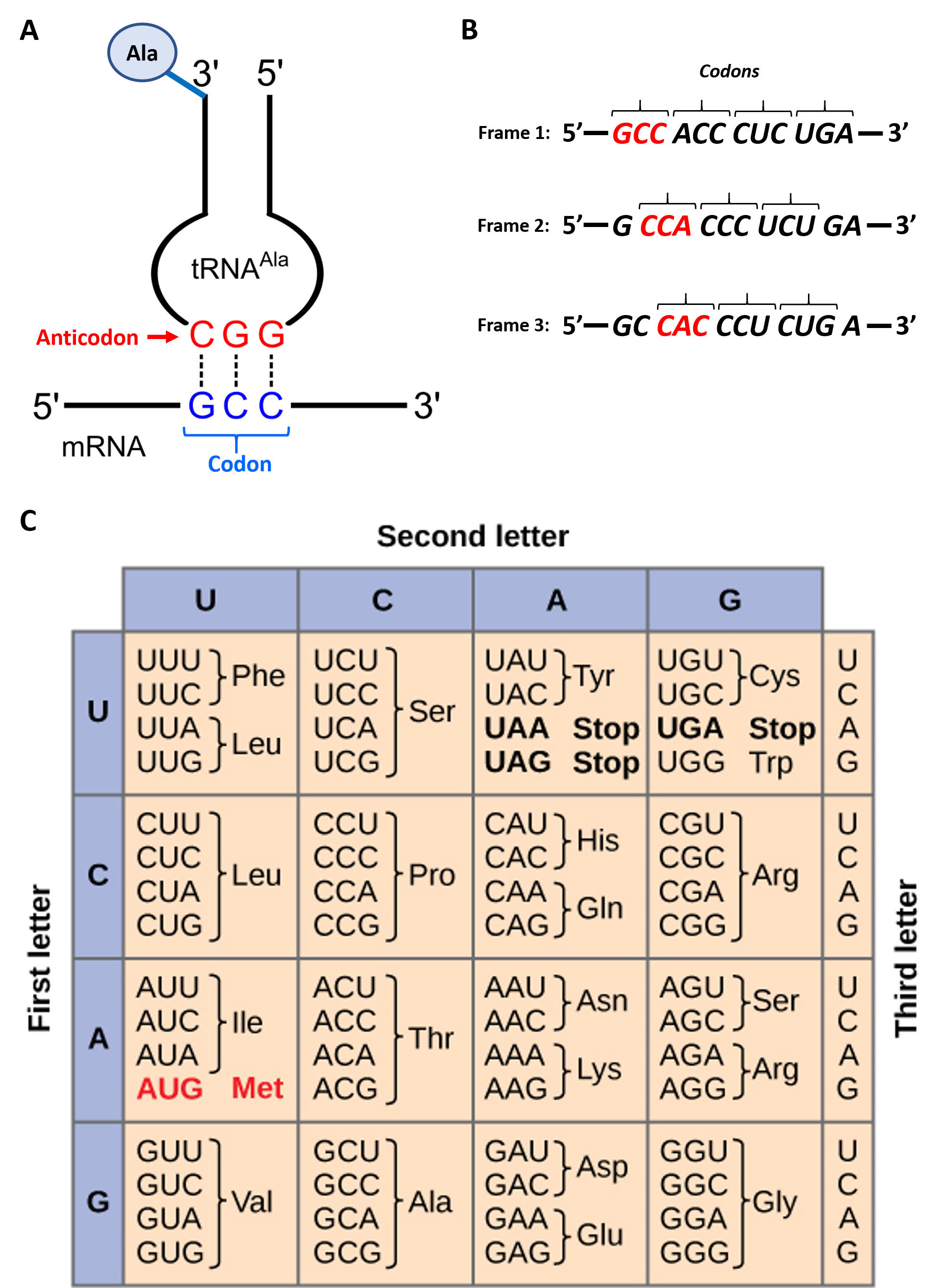
Chapter 11 Translation Chemistry
Rosalind Elsie Franklin 25 July 1920 16 April 1958 was an English chemist and X-ray crystallographer whose work was central to the understanding of the molecular structures of DNA deoxyribonucleic acid RNA ribonucleic acid viruses coal and graphite.

. Human Cells - Key Area 2 - Structure and replication of DNA Unit 1. Pauling had earlier discovered the structure of protein α helices using X-ray diffraction and based upon X-ray diffraction images of DNA. Genes are segments of chromosomes 46 strands of a chemical substance called DNA that is contained in the nucleus of each normal human cell that vary in length.
Genome-wide association studies GWAS have evolved over the last ten years into a powerful tool for investigating the genetic architecture of human disease. Multicellular organisms have a hierarchical structural organization in which any one system is made up of numerous parts and is itself a. It has half the chromosomes but twice the DNA of the originating cell.
The genotype is used to refer to the genetic composition of an individual consisting of heritable genes. The modern unit of genetic variation is the single nucleotide polymorphism or SNP. Although her works on coal and viruses were appreciated in her lifetime her contributions to the discovery of the.
In 1952 American scientist Linus Pauling 19011994 was the worlds leading structural chemist and odds-on favorite to solve the structure of DNA. SNPs are single base-pair changes in the DNA sequence that occur with high frequency in the human genome For the purposes of genetic studies SNPs are typically used as markers of a genomic region with the large majority of them having a. It has half the amount of DNA of the cell that began meiosis.
Genes are regions in the DNA that contain the instructions that code for the formation of proteins which carry out most of the work of cells. DNA was discovered in 1869 by Johann Friedrich Miescher a Swiss biochemist working in Tübingen Germany. Other scientists were also actively exploring this field during the mid-20th century.
C A monohybrid cross is the hybrid of two individuals with homozygous genotypes which result in the opposite phenotype for a certain genetic trait. The first extracts that Miescher made from human white blood cells were crude mixtures of DNA and chromosomal proteins but the following year he moved to Basel Switzerland where the research institute named after him is now located and prepared a pure. Mat 1130 For my yoke is.
Mat 1128 Come to me all who labor and are heavy laden and I will give you rest. 2272021 73054 AM Dna. Consider pure-breed tall TT and dwarf tt homozygous plants were crossed.
It is identical in content to another cell from the same meiosis. Mat 1129 Take my yoke upon you and learn from me for I am gentle and lowly in heart and you will find rest for your souls. Jan 12 2022 Lab Answer Key Free PDF ebook Download.
The asexual transfer of genetic information can allow for DNA recombination to occur thus providing the new host with new genes eg an antibiotic-resistance gene or a sugar-metabolizing gene. Lab Answer Key Download or Read Online Biology 360 Genetics Lecture Syllabus and Schedule Fall 2012 Tentative Dr. In this work we review the key concepts underlying GWAS including the architecture of common diseases the structure of common human genetic variation technologies for capturing genetic information.
Generalized transduction occurs when a random piece of bacterial chromosomal DNA is transferred by the phage during the lytic cycle. Figure 113 A comparison of Homo erectus archaic Homo sapiens and anatomically modern Homo sapiensThis table compares key traits of the crania and postcrania that distinguish these three hominins. Yes some measures of DNA say 3421 while others say 3420.
21 Single Nucleotide Polymorphisms. Dna extraction lab activity answer key Created Date. There are an estimated 25000 to 30000 genes on each chromosome.
When comparing Homo erectus archaic Homo sapiens and anatomically modern Homo sapiens across several anatomical features one can see quite clearly that archaic Homo. Human Cells - Key Area 1 - Division and differentiation in human cells Unit 1. Dna Extraction Lab Activity Answer Key Keywords.
More interestingly though the DNA in the cell appears as a double-stranded helix referred to as B-DNAThis form of DNA has a two groove in its spirals with a ratio of phi in the proportion of the major groove to the minor groove or roughly 21 angstroms to 13 angstroms. Human Cells - Key Area 3 - Gene expression. A number far below the estimate of 100000-150000 held before the work of the Human Genome Project.
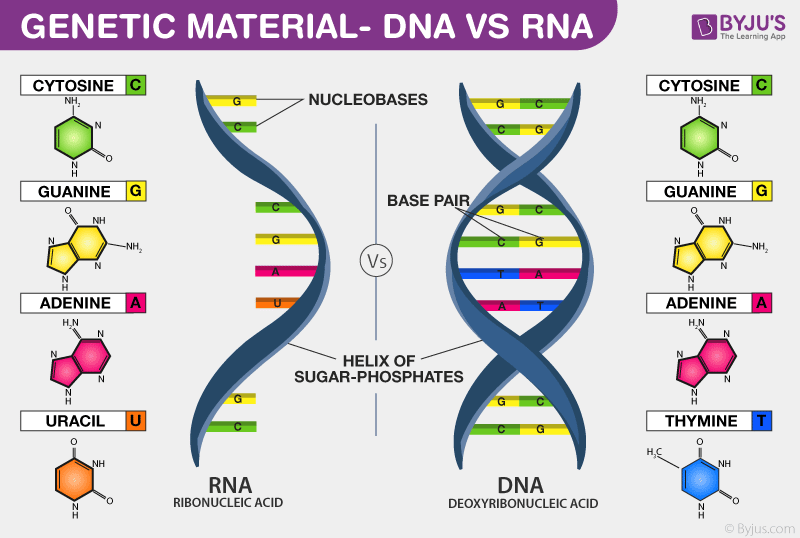
Genetic Material Properties And Differences Between Dna And Rna

Chapter 11 Translation Chemistry
Lesson 3 Outline With Answers


Comments
Post a Comment